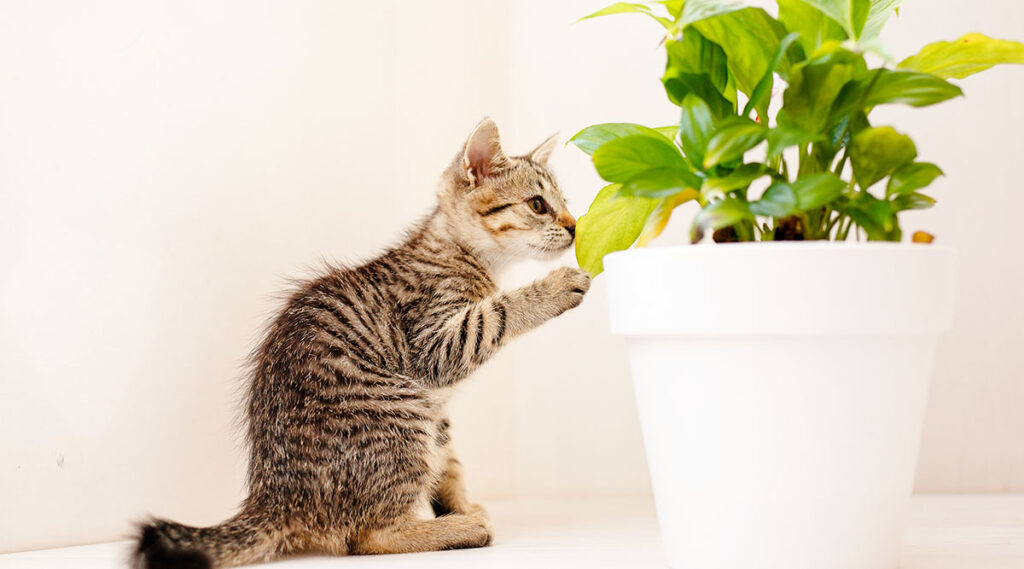
If you share your home with a curious cat or a playful pup, your houseplants might be more than just décor, they could be a hidden hazard.
Many common indoor plants can be toxic to pets, and the risk often goes unnoticed until it’s too late. Cats chew on leaves; dogs dig in pots. Even a small nibble on the wrong plant can cause symptoms ranging from mild GI upset to serious health emergencies. That’s why it’s so important to check your plants against the ASPCA’s Poisonous Plants list.
The ASPCA maintains a comprehensive, searchable database of plants that are toxic to cats, dogs, and even horses. It’s an easy, free tool that allows you to look up a plant by common or scientific name and quickly find out whether it poses a risk to your furry family members.
You might be surprised by what’s on the list. Popular houseplants like lilies (extremely dangerous for cats), pothos, aloe, and sago palms can all cause harmful reactions. Because many of these plants are sold at grocery stores and garden centers without warning labels, the responsibility often falls on pet owners to do the research.
Taking a few minutes to cross-check your indoor greenery can prevent costly vet visits and, more importantly, protect your pet’s health. If you’re unsure about a plant’s identity, snap a photo and consult your local nursery or veterinarian. And if you suspect your pet has ingested something toxic, contact your vet or the ASPCA’s Animal Poison Control Center immediately.
Creating a pet-safe home doesn’t mean giving up plants, it just means choosing wisely. A quick check today can give you peace of mind tomorrow!